
Playbooks
SEO trends 2026: what's actually ranking now, and the hype to ignore
The five guides ranking for 'SEO trends 2026' mostly agree. So do the people in the trenches. Here's the real consensus, the data behind it, and what to do this year.

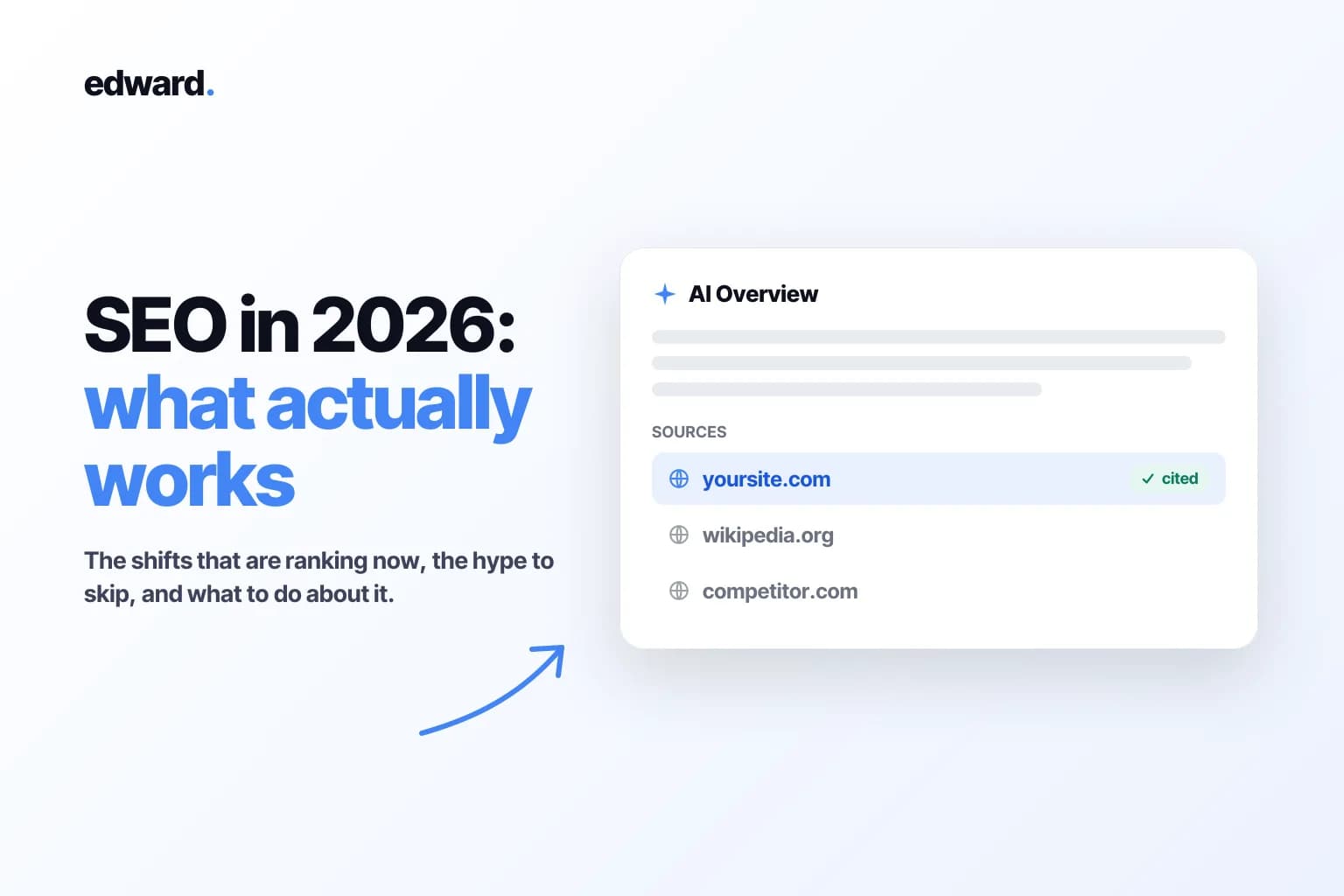
Every year, someone declares SEO dead. This year the obituary comes with a new villain. Google answers the question before anyone clicks, ChatGPT writes the blog post, and the results you spent years climbing now sit under a robot summary.
Here's the honest version. SEO is not dead. But the scoreboard changed, and most people are still playing the old game.
I read the guides currently ranking for "SEO trends 2026" so you don't have to: Evergreen Media, Search Engine Journal, Marketer Milk, and Surfer. They mostly agree with each other. Then I read the r/digital_marketing thread where people who actually run sites argue about the same thing, because that's where the polished consensus meets reality. Here's where they line up, where the hype falls apart, and what I'd do about it.
You can rank #1 and still get nothing
Start with the change that everything else follows from.
Google now answers a large share of searches itself, with an AI Overview sitting above the links. Clickstream data providers put AI Overviews on roughly 47% of searches. Evergreen has them showing up in 4.5% to 12.5% of queries overall, and up to 82.5% in health and medical. When that box appears, the click-through rate to the first organic result falls by about a third (Ahrefs data).
So you can hold position one and watch traffic drop, because the searcher already got their answer. Someone in that Reddit thread said it better than any of the guides:
you can rank top 3 and still lose traffic because ai overviews answer the query before anyone clicks. the ppl who are winning are the ones optimizing for how ai reads their content not just how google ranks it.
u/AmphibianHeavy9693, r/digital_marketing
That's the whole shift in two sentences. Ranking was never the point. Getting the customer was. For years those were the same thing. They aren't anymore. We went deep on this in what AI Overviews actually changed for small business.
Stop optimizing to rank. Optimize to get cited.
If the AI answer is the new top of the page, the job is to be inside it.
This is what people mean by GEO, generative engine optimization, when they aren't trying to sell you a course on it. Strip the jargon and it's unglamorous work: define things clearly, answer the question in the first sentence instead of the eighth paragraph, use real structure so a model can lift your answer cleanly, and make sure your pages are actually crawlable.
Ahrefs found that over 50% of pages cited by ChatGPT aren't in the top 10 search results for the main query. Read that again. The page getting quoted to your customer often isn't the page ranking first. Citation and ranking are turning into two separate competitions, and the same thread had the cleanest definition of the new goal I've seen:
The game is shifting from "rank and hope they click" to "be the source AI trusts enough to cite."
u/Adorablegini, r/digital_marketing
In practice that means measuring different things. Position still matters, but the 2026 scoreboard adds how often you get cited in AI answers, what your brand sentiment looks like, and how much traffic arrives from ChatGPT, Perplexity, and Google's AI mode. Surfer's "new metrics" list and the Reddit practitioners landed in the same place without coordinating, which is usually a sign it's real.
Brand is the new backlink
For twenty years the off-page game was links. In 2026 it's mentions.
AI systems and Google are putting more weight on what others say about your brand, not just what you say on your own site. Recent research backs this up: third-party authority signals and coverage across trusted sources now heavily influence visibility and citations in AI answers, sometimes even more than traditional backlinks. YouTube mentions, external discussions, and trustworthy topics picked up by known publishers now outperform pure link building as the signals that both AI and search engines lean on when choosing who to cite. Marketer Milk and Ahrefs both echo this trend; branded search and third-party credibility have become key signals of topical ownership.
The people doing the work are ahead of the blogs here. One agency owner in the thread said they now spend over half of a new client's first six months on brand alone:
The one thing many marketing teams seem to be missing now... is actually THE most important thing at this stage in the game: Brand Management. We're putting more than 50% of the total marketing focus on cleaning up and clarifying the brand signals.
u/BoGrumpus, r/digital_marketing
Another put the AI angle on it: sites with consistent brand mentions across forums, news, and niche publications get cited by AI tools far more often than sites with strong backlinks and no broader presence (u/Adorablegini). If you run a small business, this is the part to internalize. You don't need a thousand links. You need to be mentioned, reviewed, and talked about in the places your customers and the models both read.

AI can write the draft. It can't have done the work.
Every guide says generic AI content stopped ranking, and for once they're right.
Surfer's framing is fair: good AI-assisted content can rank, but unedited, mass-produced output gets demoted. Marketer Milk goes further and shows individual writers with real experience outranking Wikipedia and Zapier on their own topics. The thread agreed almost unanimously, and one comment nailed why:
Google can feel the difference between "written by someone who actually does this" and generic AI content. That authenticity ranks better than perfection ever did.
u/SocialBotify, r/digital_marketing
The test I use is simple. Could this paragraph only have been written by someone who actually did the thing? A real number, a real mistake, a real before-and-after, an opinion that costs something to hold. AI is excellent for the draft and the research. It cannot manufacture the part that makes a page worth citing, which is that a person with scars wrote it. That's the whole reason Edward splits the work the way it does: the model handles the draft, the substance comes from your business, and the topics come from questions your customers actually ask.
Search stopped being one box
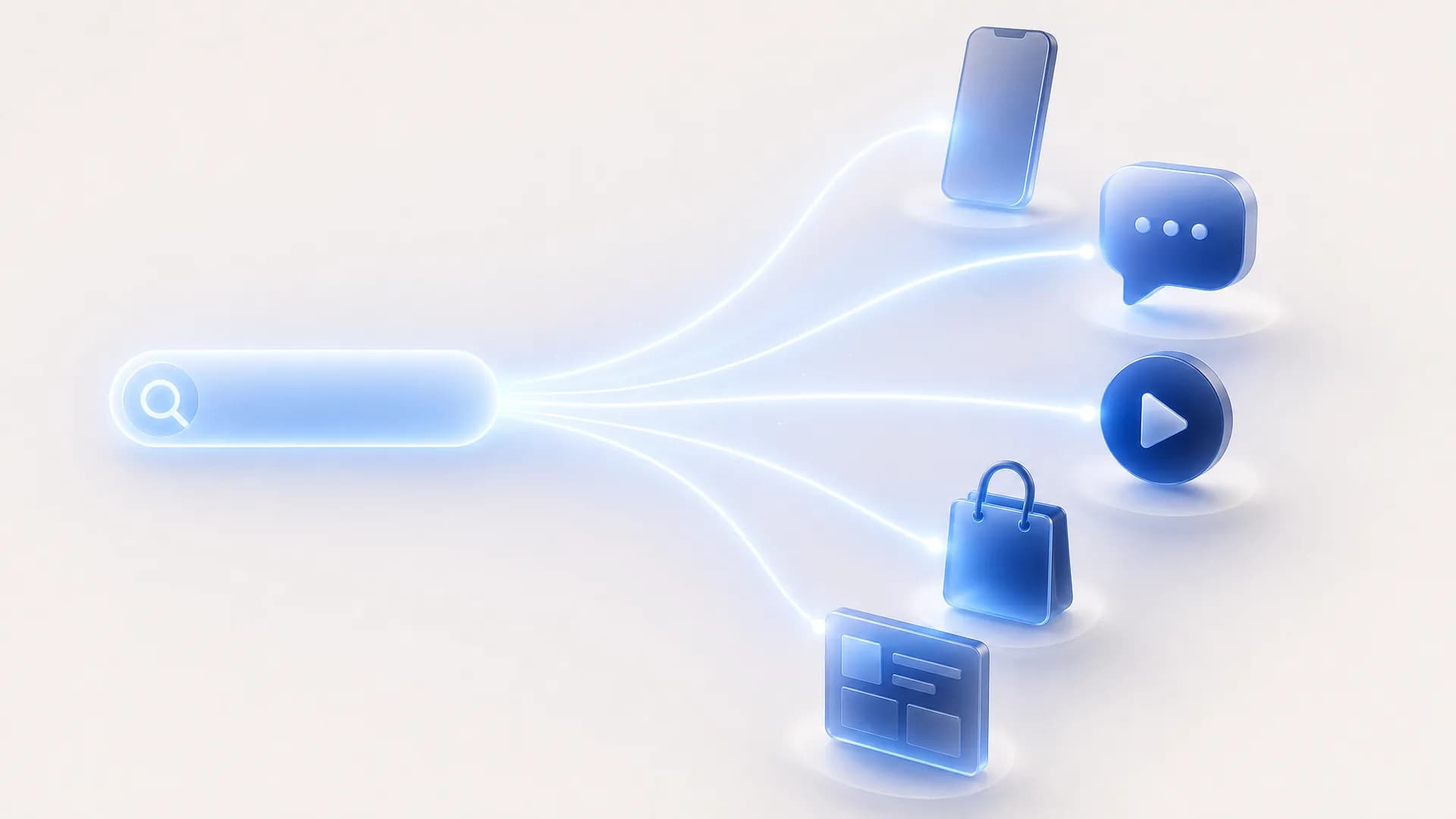
The last shift is that "search" no longer means Google.
People look for things in ChatGPT, Perplexity, YouTube, Reddit, Amazon, and Maps, often before they type anything into a traditional search bar. Evergreen notes Reddit's organic traffic is up over 600% since mid-2023 because Google keeps surfacing it. A commenter in the thread called the strategy "Search Everywhere Optimization" and put a number on it:
cerca de 73% das buscas estão dispersas entre TikTok, Reddit, Amazon e IAs como o ChatGPT... estou focando em ser citado.
(roughly: about 73% of searches are now spread across TikTok, Reddit, Amazon, and AIs like ChatGPT, so I'm focused on being cited.)
u/Novel-Bad8385, r/digital_marketing
Another was blunter: "Go full in with Reddit and build a brand rather than building a website" (u/CarpenterCandid3383). I wouldn't abandon your site, since that's still where the sale happens. But the lesson holds. If your customers ask ChatGPT and skim Reddit before they ever Google you, being invisible in those places is the same as not existing. We wrote about how people actually decide where to look in "Search Google or type a URL".
Most of this isn't new, and most of the tools are overpriced
Here's the part the trend pieces underplay and the Reddit thread says out loud.
A lot of "2026 SEO" is 2014 SEO with a new logo. As one commenter pointed out, keyword stuffing has been a losing move since 2012, and Google's helpful content update in 2023 already punished thin writing (u/BoGrumpus, u/CarpenterCandid3383). Clear, useful, specific content has been the winning play for years. The AI era didn't invent that rule. It just made breaking it more obvious.
The other half of the honesty: a lot of the shiny new tools don't work yet. Surfer, to its credit, published the negative results most vendors bury.
| What you'll be sold | What the data actually shows |
|---|---|
| "Add an llms.txt file to rank in AI" | Major AI crawlers don't request it; 8 of 10 test sites saw no change (Google's AI Optimization Guide) |
| "Convert your pages to markdown for AI" | More token-efficient, but no evidence it lifts ranking or citations (Google's AI Optimization Guide) |
| "Buy our AI visibility score" | Built on high-variance prompt sampling, unreliable as a metric (Google's AI Optimization Guide) |
| "AI does SEO now, cut the writers" | Generic output gets demoted; enterprises report "meh" ROI (Redditk) |
What to actually do in 2026
Strip it down and the consensus is smaller and saner than the combined word count suggests. The scoreboard moved:
| The old scoreboard (2018 to 2023) | What matters in 2026 |
|---|---|
| Where you rank | Whether you're the answer, and whether the click converts |
| Backlinks | Brand mentions across the web |
| Keywords | Search intent and clear entities |
| Word count | Specificity and first-hand experience |
| Visible on Google | Present on Google, ChatGPT, Perplexity, Reddit, and YouTube |
None of this is a trick. It's the boring formula one commenter wrote out plainly: intent, structure, and real content (u/sapindia1976). The hard part was never knowing that. It's doing it every week, on the right topics, structured so AI can read it, while your brand gets mentioned in enough places that the models start to trust you.
That is a lot of consistent work, and consistency is exactly what most small businesses run out of. It's also what we built Edward to handle: find the questions your customers ask, publish content that answers them clearly enough to get cited, and keep doing it while you run the business.
Frequently asked questions
Is SEO dead in 2026? No. Search changed shape, it didn't disappear. Google still handles around 90% of searches (Ahrefs, Datos). What died is the version where ranking high automatically meant traffic.
What is GEO (generative engine optimization)? It's optimizing to be quoted inside AI answers, not only to rank in the blue links. In practice that's clear definitions, direct answers, clean structure, and a real brand presence. The rest of the terms are in our SEO glossary.
Do AI Overviews kill SEO? They kill lazy SEO. They cut clicks to pages that only restate what the AI can summarize itself. Pages with something specific to say still earn the click and the citation.
Does AI content still rank? Edited, expert-led AI-assisted content can. Unedited bulk content gets demoted. The difference is whether a human who knows the topic actually shaped it.
How do I show up in ChatGPT and Perplexity? Answer questions clearly, structure pages so models can extract them, and get mentioned across the web. AI tools cite sources they see referenced and trusted elsewhere, not just sites with a lot of backlinks.
Want to know where you stand right now? Start a free audit and Edward will show you what you rank for, what you're getting cited for, and the gap between the two. Or see plans and pricing if you already know it's time to start.